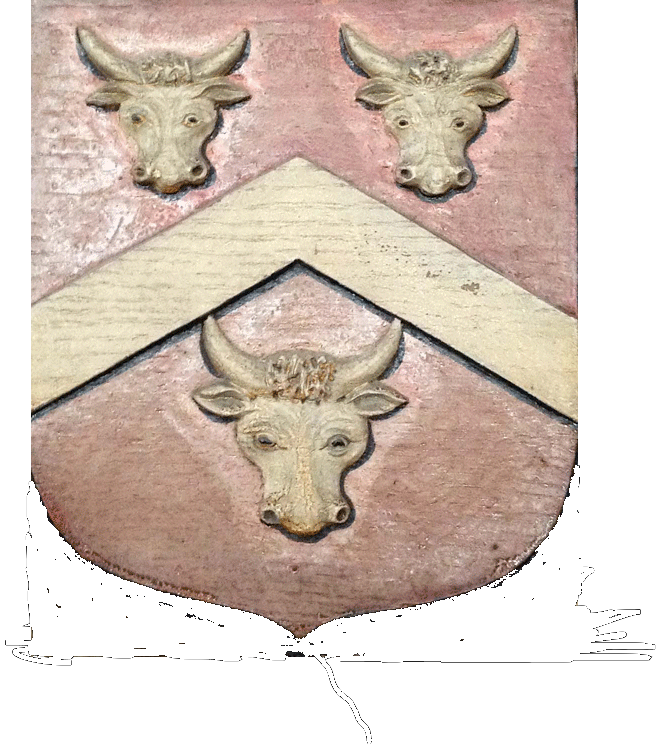
John ap Eynon (1376-1411)

Born: 1376

Parents: Thomas ap Eynon and Joan Lanks

Married: [1396?] to Elizabeth

Died: 1411

John was my thirteen times great-grandfather; he was born  in 1376.

He married Elizabeth; they possibly had five or six children, including: my twelve times great-grandfather Robert in c.1397; William, John and Thomas, between 1402 and 1405; Philip in 1406; Eleanor in 1408.

John died at [Mitcheldean?] in 1411, aged 35.

John was most likely born in 1376.

His father Thomas died in the same year, so John was a minor and became the ward of Thomas of Woodstock, Duke of Gloucester (the youngest son of Edward III).

[ wardship of John ]

On 19th May 1395, the Duke of Gloucester presented Sir Thomas Whitehead as chaplain to the parish church of Magna Dene, vacant by the death of Geoffrey Caple. The Duke was described on page 29 of Bishop Trefnant’s Register as patron of the said Church by reason of the minority of John ap Eynon, son and heir of Thomas ap Eynon, who of the said Duke holds by military service.

[ 1395 Presentation 1 ]

The Duke presented again on 8th June when Sir Thomas Whitehead retired and was replaced as chaplain by John Albyns.

[ 1395 Presentation 2 ]

On 5th November 1401 John was able to present to the Church at Mitcheldean in his own right, so must have been 21 and lord of the manor by then.

Page 54 of the Register of Bishop Trefnant records that John Mulso, Rector of Mesle, Diocese of London, was admitted to the Church of Dene Magna, upon exchange of benefice with John Albyn, last Rector, with the consent of John ap Eynon, the true patron.

[ 1401 Presentation ]

John and Elizabeth had five or six children between 1397 and 1408 –

Their first child was my twelve times great-grandfather Robert, born in around 1397.

Next came another son John, possibly born in 1402.

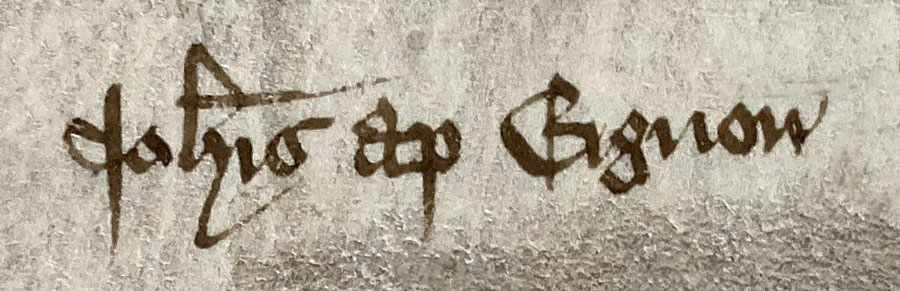
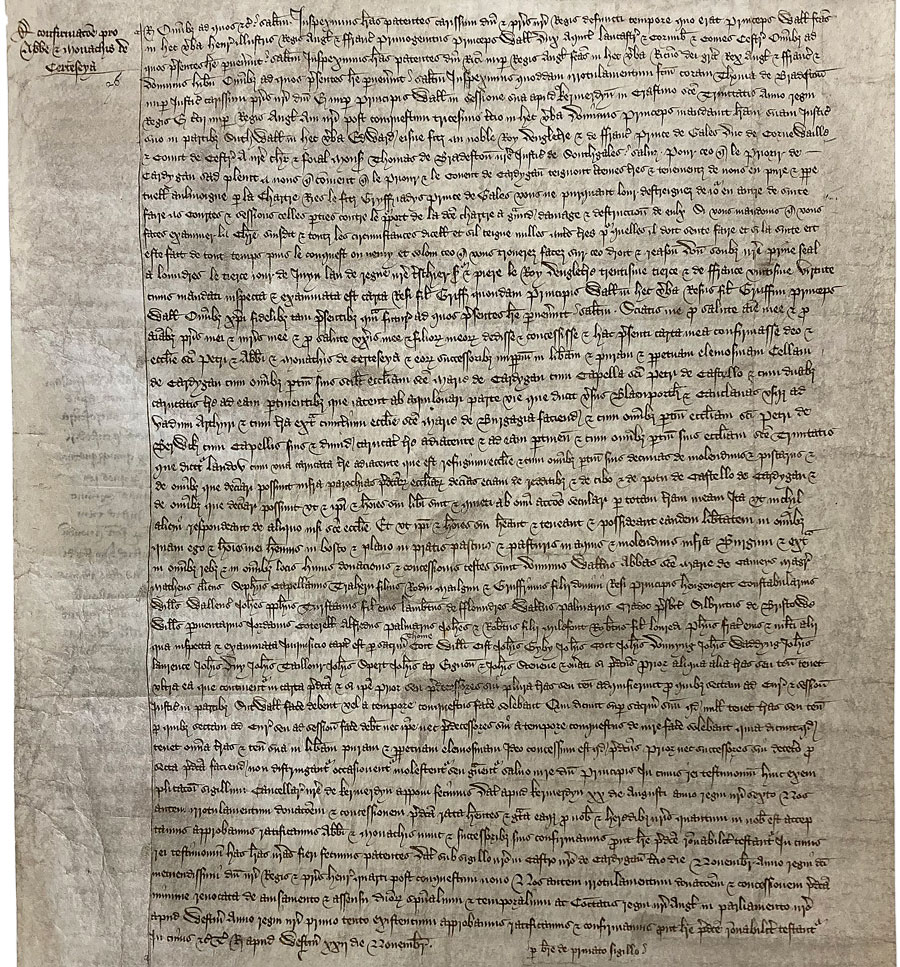
In 1424, when John would have been about 22 years old, an Inspeximus and Confirmation at Westminster on 22nd November recorded that an inquisition regarding the lands of the Abbot of Certeseya was taken by the oaths of twelve jurors, one of whom was a John ap Eignon.

1424 - Inspeximus and Confirmation

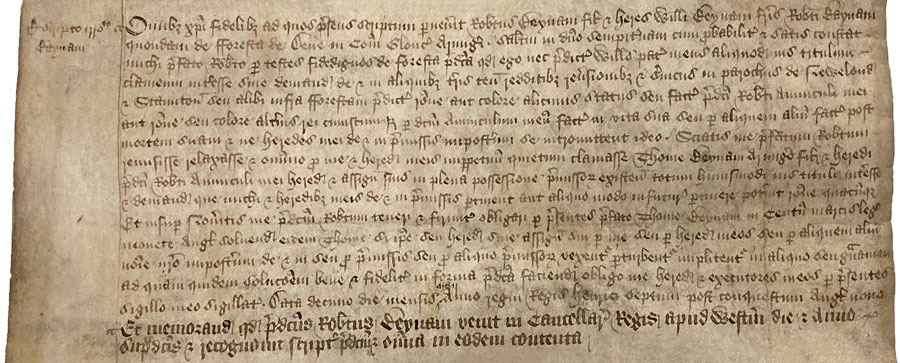
In 1494 Thomas Baynham of Clearwell, John’s grandson, received a release and quitclaim from his cousin Robert Baynham of all Robert’s lands, properties and rights in the Forest of Dean.

‘Robert the donor’ was described as ‘son and heir of William brother of Robert Beynam esquire, of the forest of Dene’‘.

1494 - Release and quitclaim
Robert Baynham son and heir of William Baynham brother of Robert Baynham

So ‘Robert the donor’ was a son of Thomas of Clearwell’s uncle William, who must be John ap Eynon’s son William born c. 1402. Whom did William marry – and when? William might have married and produced a son around 1425  … 

Was ‘Robert the donor’ the son of Joan Ketford?  Presumably not; that Robert was involved in land transactions by 1427.

If ‘Robert the donor’ was a cousin of Thomas of Clearwell and born around 1425 and was still alive for the quitclaim, then in 1494 he would have been about 70 years old, the same age as Thomas of Clearwell (72).

Did William have other children?

The Visitation of 1623 shows this William as ‘William of Callis’ who also had a son named Robert – ‘Robert of Callis’. William might have married and produced a son around 1425  … If his son was Robert of Callis, then Robert’s wife was Mrs Margaret Baynham who was a wool trader in Calais between 1542 and 1552 and widowed at some point during that period … but that is 120 years after the likely birth date of Robert of Callis …

text

text

text

text

text

How may other children did John ap Eynon and Elizabeth have?

Thomas in 1402?  Did he die in 1444?  Or is this John, above?

Philip, in 1406?  On 5th June 1465, a Philip ap Eynon was appointed to the perpetual chantry of Robert Greyndour in honour of St. John the Baptist and St. Nicholas in the church of All Saints at Newland on the death of Sir William Phen; and then on 2nd December 1485 as Sir Philip Baynham he was replaced on the presentation of Thomas Baynham of Clearwell and his second wife Alice (Walwyn) in an exchange with Thomas Stokes, Vicar of Lydney. In her will, Robert Greyndour’s widow Jane directed that she be buried in the chantry chapel by Robert’s side and that prayers be said and psalms sung for their souls by various priests, for which she left money, plate and vestments for the altar as well as ‘to Sir Philip Beynham. my chantry priest, my fair little portues [portable prayer books] of the Salisbury use covered with green cloth, lying for the most part in my parlour window in a bag, a book which is called Pupilla Oculi, which the said Philip hath in his keeping, my calendar, a great flat rose-piece of silver with a cover to the same of silver, and £10 in money’. The Greyndour foundation included a chantry school, so appointees were also headmasters of what eventually became Bells Grammar School.

Did Elizabeth survive John and re-marry, to a Berewe?

Did she die in 1422?

Notes:

John Ap Eynon was a minor when his father Thomas died in 1376 so was made the ward of Thomas Woodstock, Duke of Gloucester, by the king.

Gloucester was arrested at his home, Pleshey Castle in Essex, by Richard II on 11th July 1397, imprisoned in Calais awaiting trial and murdered on 8th September; he was declared guilty of treason by parliament and his estates forfeited.

Presumably John had just attained his majority before Gloucester’s death. He was still a minor in the summer of 1395, but had definitely reached his majority before 1401, so there was no mention of him in the IPM of Thomas Woodstock.
Acknowledgements:
  • 1401 IPM of Thomas Woodstock, Duke of Gloucester – National Archives, C 137/33/51
  • 1424 Inspeximus and Confirmation —– – National Archives, C —